£7.9bn
The size of the UK health and wellness spa industry, and the scale of the retail opportunity sitting inside it.

Why the best spa brands make retail feel like part of the treatment, not a separate conversation.
Ask most Spa Directors why retail underperforms and the answer usually points to the team: therapists aren’t confident enough, aren’t trained enough, or guests simply don’t want to be sold to during a treatment that’s meant to be relaxing.
That’s rarely the real problem. Most therapists are perfectly capable of a natural conversation, the issue is that many brands give them nothing to build that conversation on. If a guest has no visible understanding of why a product was chosen for them, the retail moment has to be manufactured from nothing, a generic recommendation bolted onto the end of a treatment. However well trained the therapist is, that moment will always feel like a pivot, from service to sales, because nothing in the treatment built up to it.
The brands that convert best don’t ask therapists to bridge that gap through skill alone. They remove the gap entirely, by making the reasoning behind the product visible during the treatment itself. By the time retail is mentioned, the guest already understands why it matters.

Spa retail “is not so much a sales push as it is a recommendation to the client,” reflecting the intimate, personal nature of the spa environment compared with other retail settings.
Lynne McNees, President, International Spa Association (ISPA), Professional Beauty
The size of the UK health and wellness spa industry, and the scale of the retail opportunity sitting inside it.
Report that retail already makes up 10% or more of total revenue, this isn’t a fringe opportunity, it’s mainstream.
What top-performing spas earn from retail, compared with the average. The gap is the opportunity.
Sources: IBISWorld UK Health and Wellness Spas Industry Report; International Spa Association (ISPA) Spa Success Survey; Zenoti 2025/2026 Beauty and Wellness Benchmark Report
Curious what that gap could be worth to your own spa? The Retail Gap Calculator further down this guide turns these industry averages into your own numbers.
Anne Semonin and marocMaroc could not feel more different as brand experiences, one consultative and precise, the other sensory and transportive. What they share is a treatment that visibly justifies its own retail recommendation, before the therapist ever has to ask.
Consultation-led. The guest watches their Intensive Complex being mixed and understands exactly why. Retail follows as a personalised prescription, the Recommendation Card, not a suggestion.
Built around ritual, not reasoning. marocMaroc is a modern interpretation of the hammam, and the guest experiences its ingredients and technique directly during treatment. Retail becomes an invitation: recreate this ritual at home, not simply buy this product.
Two different guests, wanting two different things from their time in the treatment room. What they share is a treatment that’s already made the case for them by the time it’s over.
Industry data backs this split: ISPA’s Spa Success Survey found facials achieve retail-to-service ratios above 10% at 82% of spas, compared with just 25% for massage, a gap consistent with how much more visible product reasoning is in a facial than in most body treatments.
There’s a third reason both mechanisms work as well as they do, and it’s one we believe strongly at VILASA: exclusivity. When a guest can buy the same product in any department store, pharmacy or online marketplace afterwards, the treatment room loses some of its urgency, there’s no real cost to saying “I’ll pick that up later.” Brands genuinely only available through your spa remove that option entirely. If a guest wants to keep feeling what they’ve just experienced, today’s treatment is the only place to get it, and that urgency does real commercial work alongside the personalisation and ritual covered above.
| Anne Semonin | marocMaroc | |
|---|---|---|
| Approach | Consultation-led | Ritual-led |
| Guest question answered | “Why was this chosen for me?” | “How do I keep feeling like this?” |
| The mechanism | Intensive Complexes & Recommendation Card | Moroccan ingredients & technique, used visibly |
| Retail framing | A personalised prescription | An invitation to recreate the ritual |
| Best suited to | Facial treatments | Body treatments & ritual menus |
Every Anne Semonin facial begins with a consultation and a mixing tray placed in the treatment room. Products are selected in front of the guest and personalised using the brand’s iconic Intensive Complexes, a blend of essential oils and trace elements chosen for that guest’s skin, lifestyle and environment.
The guest sees why products are chosen. They see how they’re blended and they feel part of the process. Retail then becomes a continuation of the treatment, not a separate conversation. It never feels pushy. It feels helpful.
Lynne Leon, Founder, VILASA, on Anne Semonin’s treatment-to-retail alignment

This creates what we’d call spa theatre. But more importantly, it creates understanding. Because the guest has watched the reasoning happen, the Recommendation Card at the end of the treatment isn’t a new idea introduced at the till, it’s a continuation of something they’ve already witnessed and understood. From a spa’s perspective, this approach organically increases retail conversion, allows therapists to step fully into their role as skincare experts, and removes the pressure of “selling” entirely, because no two skins are ever the same, and when retail is prescribed rather than promoted, guests respond.

Two connected systems: Intensive Complexes make personalisation visible during the treatment, the Recommendation Card extends that same personalised logic into a home-care recommendation, so retail reads as prescription, not promotion.
Anne Semonin is already trusted within exactly the kind of five-star hotel spas navigating this question today, including properties such as:
Across the wider VILASA portfolio, trade accounts include The Newt in Somerset, Hotel Cafe Royal, and Four Seasons Tower Bridge London, five-star properties where retail conversion is measured, not assumed.
marocMaroc works differently, and deliberately so. Where Anne Semonin’s retail moment is built on visible clinical reasoning, marocMaroc’s is built on visible ritual. marocMaroc is a modern interpretation of the hammam, Morocco’s traditional bathing ritual, and its ingredients and technique are used directly on the skin, in front of, and on, the guest, as part of an authentic tradition rather than a scientific protocol.

That distinction matters for how retail is framed. Anne Semonin’s retail moment answers “why was this chosen for me?” marocMaroc’s answers a different question: “how do I keep feeling like this?” The retail conversation isn’t a product recommendation, it’s an invitation to recreate a specific, memorable sensory experience at home, built on the authentic Moroccan ingredients and ritual felt directly on the hammam slab. For spas building out a fuller body ritual menu, our guide to creating an authentic hammam experience covers this in more depth.
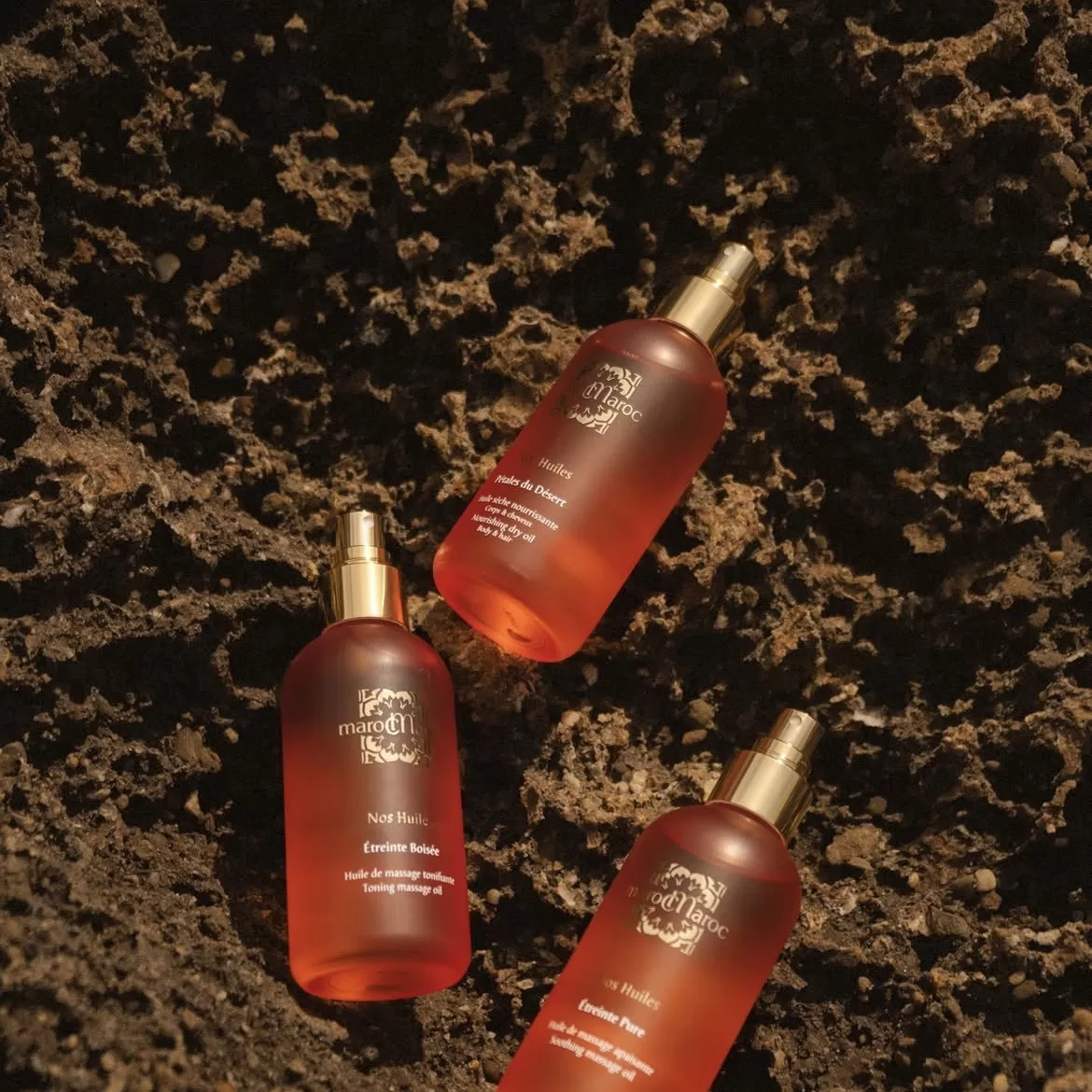
Built around argan, the same nourishing oil at the heart of the hammam ritual, alongside orange blossom, in massage and body oil form, so the guest can take home the exact ingredient felt on the hammam slab.
Neither brand’s recommendation works as a card handed over at the end. It’s the conclusion of a conversation that’s already happened, not a replacement for one, which is why what a therapist actually says in the room matters more than what’s printed anywhere.
Anne Semonin, at the end of a facial: “I mixed your Intensive Complex today because your skin needed exactly this. You can take the same blend home on your Recommendation Card, so what you’re using tonight is the same thing your skin just responded to.”
marocMaroc, at the end of a hammam ritual: “That’s the same ritual we’ve just used on you, straight from Morocco. Most guests want to keep that feeling going after they leave, this is exactly what would let you recreate today at home.”
This is precisely why pairing the two brands across a spa’s menu works so well. Anne Semonin covers the facial, precise and consultative, results made visible through personalisation. marocMaroc covers the experience, where the ritual carries the same weight, real, active Moroccan ingredients doing genuine work, delivered through a story guests want to keep living in. Between them, a guest has a reason to buy no matter which treatment they book.
Anne Semonin’s signature Mixology system, blending essential oils, trace elements, plant extracts and marine ingredients into a bespoke treatment mix chosen for each guest during consultation.
Anne Semonin’s method for extending a treatment into personalised home care, so the retail recommendation continues the logic of the Intensive Complex used in the room.
A traditional Moroccan bathing ritual built around steam, exfoliation and cleansing. marocMaroc offers a modern interpretation of this heritage in spa treatment form.
A nourishing oil pressed from the kernels of the Moroccan argan tree, the ingredient running through most of the marocMaroc range, from the hammam ritual itself to the Nos Huiles collection guests take home.
A mineral-rich clay, mined in Morocco, used during the hammam ritual to cleanse and soften skin and hair.
The degree to which a spa’s retail recommendation is a visible continuation of what happened in the treatment, rather than a separate conversation introduced at the till.
This is the section built for the conversation with your General Manager. Retail conversion isn’t a spa-department nice-to-have, it’s incremental revenue with close to zero marginal cost once the brand mechanism is in place.
A single retail conversion can add significantly more margin than the treatment itself, captured within a conversation the therapist is already having, not a separate sales pitch bolted on top.
The retail moment happens inside a treatment that’s already being delivered, not as a separate sales interaction requiring additional staffing.
The brand gives every therapist a genuine starting point, but it’s the training and process behind it that turns that into consistent performance across the whole team, not just your strongest sellers.
When a product is genuinely exclusive to the spa, there’s no “I’ll pick it up online later.” Today’s treatment is the only chance to buy it, urgency working in your favour, not the guest’s.
A GM doesn’t need to hear about spa theatre. They need to hear that the treatment room is already generating retail revenue that training alone struggles to unlock on its own.
Top-performing spas earn 15-25% of revenue from retail, the average sits at 5-10%. Enter your numbers below to see exactly where you stand, and what closing that gap could be worth in real terms.
Based on the 15-25% top-performer benchmark from Zenoti’s 2025/2026 Beauty and Wellness Benchmark Report. An indicative guide, not a guarantee.
A one-page summary of the business case above, with space to fill in your own numbers from the calculator, built to be printed or forwarded on its own. For the fuller commercial case, our guide to revenue beyond the spa covers how to present this at the property level, room rate, occupancy and length of stay, alongside a step-by-step sequence for that conversation.
Before changing brands, training, or incentives, it’s worth understanding exactly where your current retail moment breaks down. This is the same sequence we’d walk through with a Spa Director reviewing their menu.
A short, practical agenda for introducing this principle to your team in 15 minutes, no slides required.
Most spas treat the treatment and the retail moment as two separate events: a service, followed by a sales pitch. Guests can feel that shift, and therapists often feel it too, which is why retail can feel like an add-on rather than a natural next step.
Training matters, and well-trained therapists do convert better. But training alone can’t fix a missing mechanism: if a brand does not build personalisation and visible technique into the treatment itself, therapists are left to manufacture a retail moment from nothing, however well trained they are.
Anne Semonin’s Intensive Complexes are mixed in front of the guest during consultation. The guest sees exactly why each product was chosen, which makes the Recommendation Card feel like a natural continuation rather than a sales pitch.
marocMaroc is a modern interpretation of the hammam, using authentic Moroccan ingredients and technique visibly during the treatment itself. Retail becomes an invitation to recreate that ritual at home, rather than a separate product recommendation.
Yes, availability affects urgency. If a guest can buy the same product anywhere, including online, there’s little cost to delaying the purchase. Brands genuinely exclusive to the spa remove that option, and that urgency is a meaningful, often overlooked, part of retail conversion.
Start by checking whether guests understand why a product was chosen for them, whether therapists reference retail products during the treatment itself rather than only at the till, and whether your retail moment feels like a continuation of the treatment or a separate conversation.
Tick what already applies to your spa’s approach to answer honestly, and we’ll give you a straight read on where you stand.
VILASA partners with luxury hotel spas across the UK and Ireland, helping operators pair the right brands across their menu so that every treatment category, facial and body alike, has a genuine, built-in reason for guests to take the experience home with them. Anne Semonin and marocMaroc are deliberately structured differently, clinical versus ritual, but both are built around the same principle: the treatment should do the convincing, not the therapist alone. This same principle underpins how we think about Forbes Standards alignment too, retail and service excellence tend to move together, not separately.
Where a spa’s current brand isn’t converting the way it should, on the treatment experience or at retail, the aim isn’t to add another line alongside it. It’s to replace it with a brand built to outperform it on both fronts.
If you’re reviewing why retail underperforms across your menu, we’d be glad to walk through where the gap sits, and which brand mechanism would close it.
IBISWorld, “Health and Wellness Spas in the UK” industry report
International Spa Association (ISPA), Spa Success Survey, March 2024
Zenoti, 2025/2026 Beauty and Wellness Benchmark Report
Lynne McNees, President, ISPA, quoted in Professional Beauty, “Selling the sales pitch”
Our team works directly with Spa Directors to assess where retail conversion is breaking down, and which brand mechanism would close that gap for your menu. No obligation, no minimum order required to have a conversation.
A 20-minute call, no obligation and no sales pressure, we’ll talk through fit, product selection and next steps for your spa.

How the right brand choice helps embed Forbes-aligned excellence into the treatment room, without adding complexity.
What today’s guests really expect, and how leading luxury spas are delivering it.

Most guests never book a treatment. Here’s how the best spas reach them anyway, and what it’s worth when they do.


© 2026 VILASA.. All Rights Reserved.